The Architecture of
Systemic Health
Modern medicine has conquered acute illness but stalls against chronic complexity. Differential Medicine is the rigorous application of first principles to solve the patient as an integrated system.
The Acute Care Paradox
Modern healthcare is a victim of its own success. We have achieved incredible feats in treating acute illnesses—trauma, infection, surgical emergencies. Yet, this "reactive" model, designed to suppress symptoms and isolate organs, fractures when faced with the complexity of chronic disease.
Patients present with interconnected dysfunctions—metabolic, hormonal, immunological—that do not fit neatly into a single specialty. The standard of care labels the diagnosis but often ignores the trajectory.
"Differential Medicine was born from this gap. It is not a rejection of conventional medicine, but its necessary evolution. It is the shift from a parts-oriented view of biology to a process-oriented holism."
We aim to restore the "Why" in medical practice. By merging high-resolution biomedical data with a systemic understanding of physiology, we create a "blue ocean" of care that is preventive, precise, and deeply patient-centric.
From Reductionism to Integration
The Old Model
Reductionist & Reactive
- —Treats the body as separate parts.
- —Focuses on symptom suppression.
- —Limited by population averages.
The Differential Approach
Integrated & Proactive
- →Treats the body as a unified network.
- →Focuses on root-cause resolution.
- →Guided by individual multi-omics data.
Methodology & Rigor
04Systems Biology
Decoupling the symptom from the organ. We trace the ripple effects of dysfunction across the neuro-endo-immune supersystem to find the upstream cause.
Computational Diagnostics
Leveraging AI to harness the data deluge. We synthesize genomics, proteomics, and metabolomics to reveal patterns invisible to the human eye alone.
First Principles
Obsessive investigation of micro-level factors. We validate hypotheses against fundamental biology—cellular pathways, enzyme function, and microbial ecology.
Reproducibility
Moving beyond intuition. By standardizing data collection and analysis, we create a reproducible framework for complex care that stands up to scientific scrutiny.
Biochemistry & Molecular Biology
Differential Medicine begins at the foundation—with biochemistry and molecular biology. These disciplines form the language through which the body's systems communicate. From there, every system—hormonal, microbial, neurological, metabolic—is explored with equal attention. None stands above the others; each is a piece of the same intricate design.
This approach looks at the human organism from the inside out. We decode how molecules, cells, and biochemical pathways shape health and disease. In practice, this means a deep work-up: analyzing genetic variations, inflammatory markers, and neurotransmitter levels not as isolated values, but as a diagnostic architecture.
The microbiome remains a meaningful element within this system. We are "microbiology-obsessive," using high-resolution data to understand gut-brain communication and immune regulation. Yet, these are never isolated treatments; they are integrated into a larger plan.
"Every data point, from a gut microbe ratio to a gene mutation to an obscure enzyme level, is considered potential valuable information. We merge the micro and the macro to reconstruct the full biological story."
The Clinical Operating System
The "Intelligence Amplifier" for
Complex Care
Today's medical practice generates an unmanageable deluge of data—from genomic sequences to continuous wearable metrics. A human provider alone cannot synthesize this signal from the noise.
At the Institute, we are building the software layer that bridges this gap. We view AI not as a replacement for clinical judgment, but as a sophisticated lens. It sifts through high-dimensional biomedical data to identify subtle biomarkers and causal links that would be impossible to discern otherwise.
Integrating disparate datasets (genomics, proteomics, microbiome) into a unified patient model.
Detecting non-linear correlations between lifestyle inputs and biological outcomes.
Ensuring all algorithmic insights are cross-referenced with established biological principles.
> SYSTEM STATUS: DEVELOPING PROTOCOLS FOR Q3 2025 RELEASE.
The Clinical Protocol
Deep Phenotyping
Comprehensive anamnesis & whole-system physical examination.
Precision Analytics
Targeted Omics: Genome, Microbiome, Metabolome.
Algorithmic Synthesis
AI-augmented pattern recognition to identify root dysfunction.
Targeted Intervention
Bio-individualized protocols based on specific molecular targets.
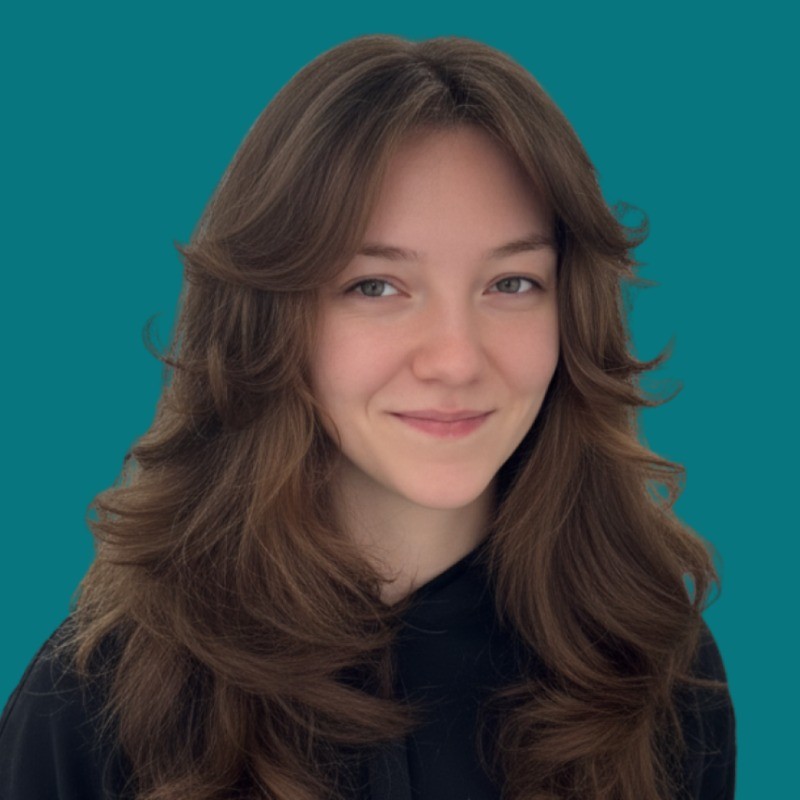
Pauline Jumeau
Founder & Academic Director
Personnel File // 001
Pauline Jumeau, PharmD, PhD, is the Founder of the Institute for Differential Medicine, a new model of preventive and precision-oriented care built around deep biomarker analysis, micronutrition, and evidence-based biohacking. Her work focuses on bridging clinical science with actionable patient protocols, offering physicians and practitioners a structured approach to metabolic health, stress physiology, sleep regulation, and hormonal balance.
She trained as a pharmacist and completed her doctorate with a focus on physiology and integrative health. Her method combines laboratory biomarkers, wearable-based data, and phenotype-specific nutrition strategies to create targeted interventions that improve patient outcomes in energy, cognitive performance, metabolic resilience, and long-term disease prevention.
Through the Institute for Differential Medicine, she develops medical-grade frameworks that help clinicians refine diagnostics and therapeutic pathways. Her research interests include nutrient-gene interactions, early-stage metabolic dysfunction, mitochondrial optimisation, and the clinical application of adaptive lifestyle protocols.
Beyond her clinical and research work, Pauline publishes educational material for healthcare professionals and collaborates with physicians, longevity clinics, and health-tech companies to translate the latest insights into practical, patient-ready tools.
Clearance: Level 5
Join the Future of Patient Care
We are accepting a limited cohort of physicians for our foundational training in Differential Medicine. Master the tools to solve your most complex cases.